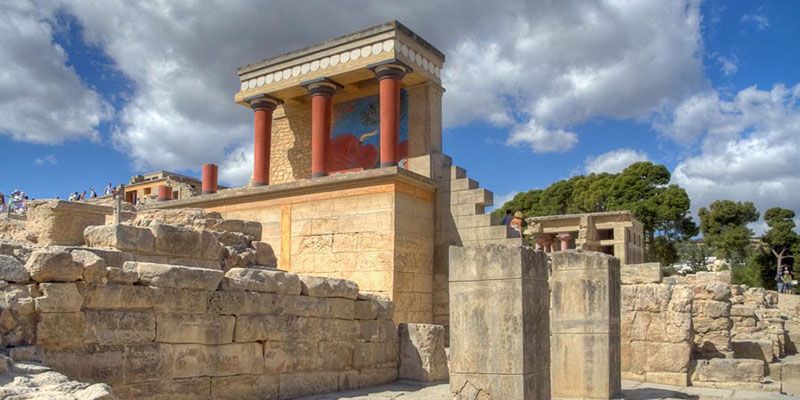
The Palace of Knossos, the largest archaeological site of the Bronze Age on Crete, is often described as Europe’s oldest city. Once the vibrant heart of the Minoan civilization, it served as both a ceremonial and administrative center, reflecting the sophistication and artistry of this remarkable culture.
Its intricate layout — a labyrinth of royal chambers, workshops, storerooms and courtyards — unfolds around a grand central court, embodying the complexity and harmony of Minoan architecture. The vivid frescoes that once adorned its walls, along with the elegant motifs found on pottery, seals, and artifacts, offer a fascinating glimpse into everyday life, beliefs, and rituals of the Minoans.
Today, the restored remains of Knossos continue to inspire awe, inviting visitors to walk through history and experience the legacy of one of the world’s most advanced ancient civilizations.
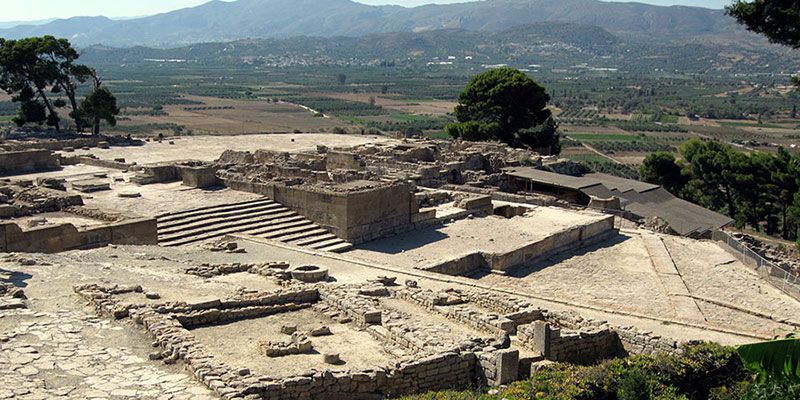
Knossos’ quieter southern rival, set on a ridge above the Messara plain. Fewer crowds, wide views, and the home of the still-undeciphered Phaistos Disc.